Users no longer need to search for solutions through a series of separate queries. In ChatGPT, they can describe a problem, specify their constraints and selection criteria, and refine them throughout a conversation. This raises the question of how ChatGPT Ads can fit into this decision-making process.
ChatGPT Ads allow brands to display clearly labeled advertisements to users as they explore options, compare products and services, or make decisions through conversations with ChatGPT. Unlike traditional advertising, which is primarily based on search queries and keywords, ad relevance can also be determined by the context and intent of a conversation.
Brands therefore need to understand who they are targeting, what users are trying to achieve, and how to measure whether a campaign delivers business results.
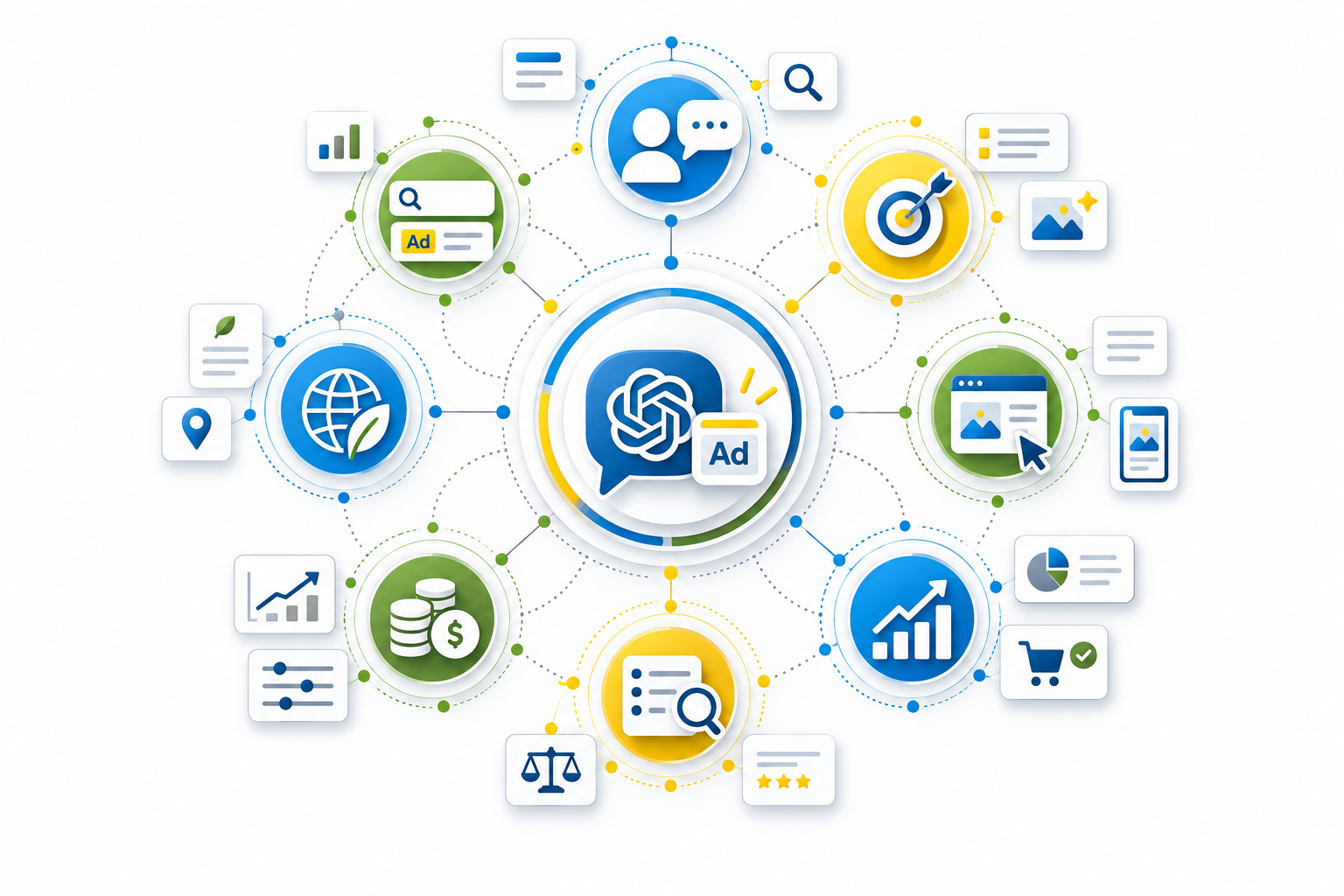
AI Summary / Key Takeaway: What Do ChatGPT Ads Change for Brands?
- Ad placement: ChatGPT Ads can appear while users research and compare solutions.
- Relevance: Ad selection takes into account conversational intent, ad content, and the landing page.
- Response independence: Paid advertisements do not influence the content of ChatGPT’s responses.
- Performance: Results also depend on the quality of the advertising message, landing page, and conversion tracking.
- Digital strategy: ChatGPT Ads complement Google Ads, SEO, and GEO rather than replacing them.
What Are ChatGPT Ads and How Do They Work?
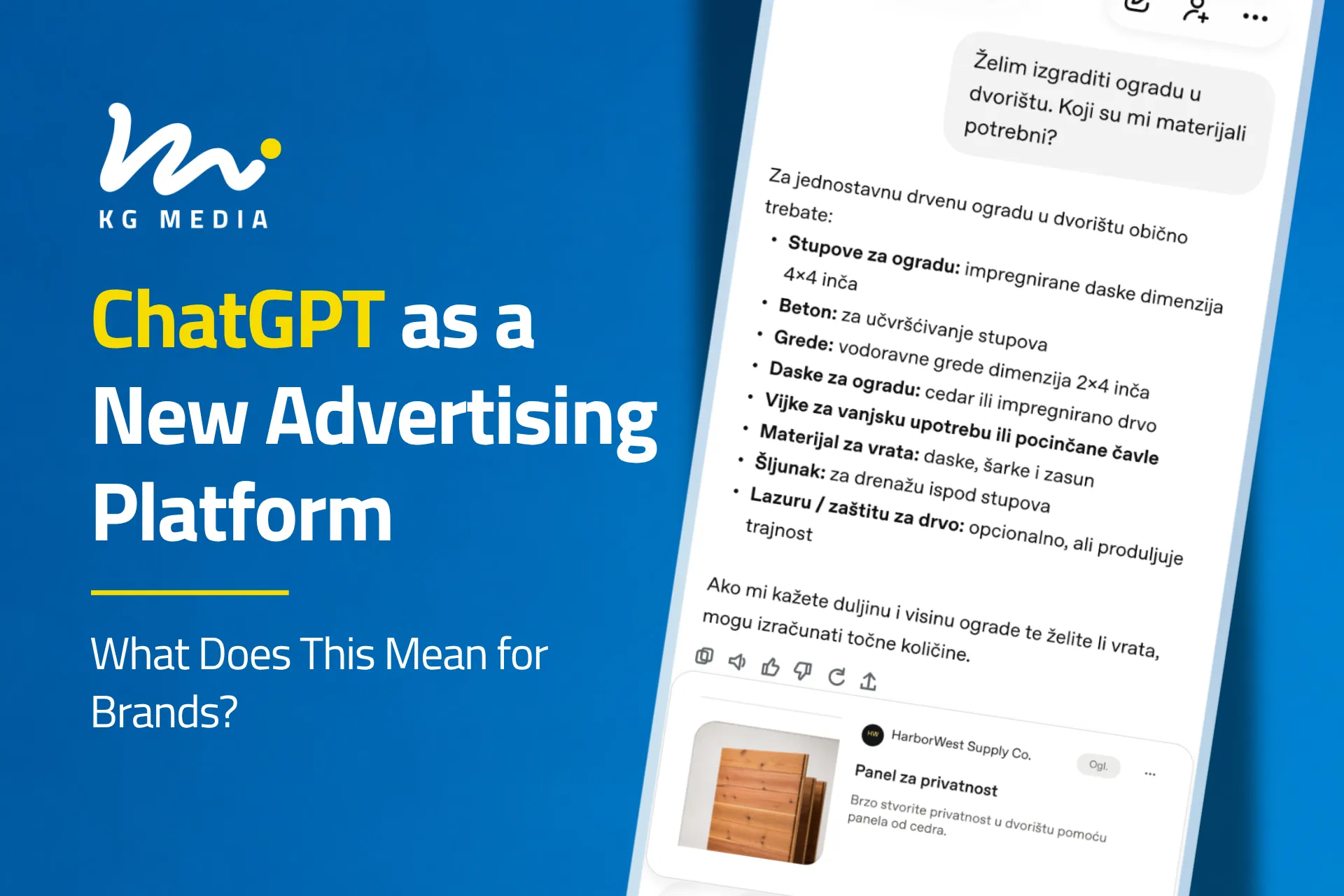
ChatGPT Ads are separate paid advertising messages that may appear alongside a conversation when the system determines they are relevant to the user’s intent. They do not influence the content of ChatGPT’s responses.
Where Do Ads Appear in ChatGPT?
According to official information from OpenAI, ads in ChatGPT may appear below responses and include the advertiser’s name, logo, headline, description, image, landing page link, and a sponsored content label.
Ads may be displayed to users on Free and Go plans, while Plus, Pro, Business, Enterprise, and Edu accounts do not display advertisements. OpenAI emphasizes that advertisers do not have access to users’ private conversations.
In October 2026, OpenAI introduced a new visual ad format that is initially being tested alongside image generation in ChatGPT.
What Is the Difference Between ChatGPT Ads and Google Ads?
The key difference is that Google Search Ads traditionally start with a search query, while ChatGPT Ads can use the broader context of a user’s conversation and their expressed intent.
|
Element |
Google Search Ads |
ChatGPT Ads |
|
Starting point |
Search query |
Conversation and intent |
|
Relevance |
Keywords and additional signals |
Contextual hints and other signals |
|
Environment |
Search engine results pages (SERPs) |
Conversational interface |
|
Landing page |
Matches the search query |
Addresses the need described during the conversation |
|
Intent |
Search intent |
Broader conversational intent |
Keywords remain important, but brands should separately test advertising messages designed for direct search queries and needs expressed during conversations.
How Does ChatGPT Decide Which Ad to Display?
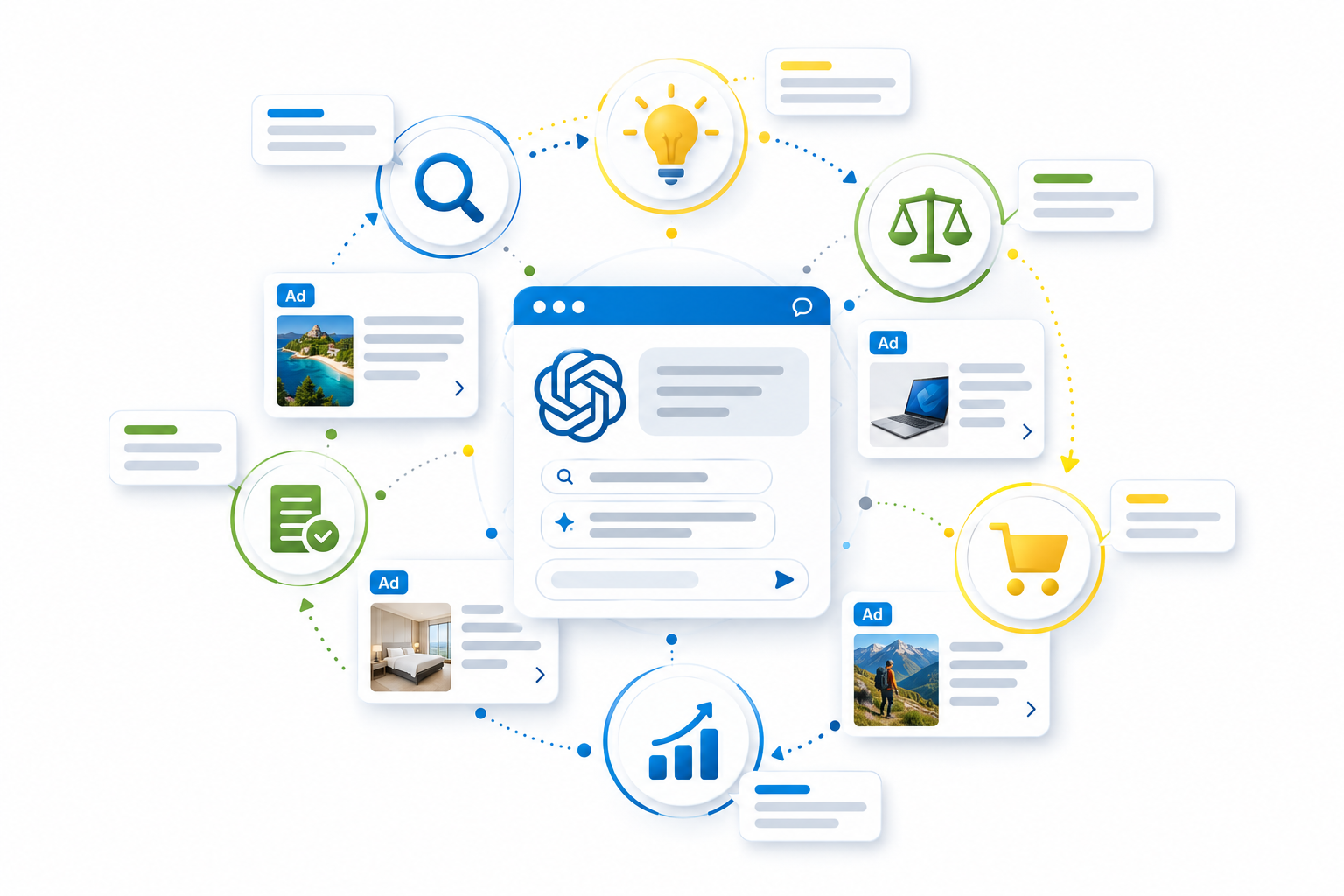
OpenAI evaluates ad relevance based on the context of the conversation, ad content, and landing page. When personalization is enabled, additional permitted signals may also be used.
Example of a user need:
– A company with 20 employees is looking for a CRM system integrated with email marketing while working within a limited budget.
In Google Search, an ad might be matched to the query “CRM for small businesses”, while in ChatGPT, ad relevance may also be evaluated based on the additional requirements described by the user.
In both cases, the landing page should clearly present available integrations, offer terms, and the system’s capabilities.
Advertisers can also add contextual hints describing topics, keywords, or the needs of potential customers.
This type of contextual targeting is not the same as exact-match targeting and does not guarantee that an ad will be displayed.
What Benefits Do ChatGPT Ads Offer Brands During the Purchase Decision-Making Process?
This channel allows brands to display relevant advertisements while users explore their needs and compare potential solutions. Advertising messages should therefore be adapted to different stages of the purchase decision-making process.
The customer journey may look like this:
– Problem recognition → Research → Comparison → Evaluation → Purchase decision
User criteria, such as price and functionality, help shape more relevant advertising messages.
What Is the Difference Between ChatGPT Ads and GEO Optimization?
ChatGPT Ads represent paid AI visibility, while GEO optimization aims to increase a brand’s organic visibility in generative responses (organic AI visibility).
Paid advertising does not allow advertisers to purchase placement within ChatGPT responses or influence which brands the assistant mentions or recommends.
SEO, GEO, and AEO collectively support organic visibility on Google and in generative search engines (generative search / AI search), while ChatGPT Ads represent a separate paid advertising channel.
The relationship between organic and paid visibility is explained in greater detail in our article on SGA optimization for Google and AI tools.
How Much Does Advertising on ChatGPT Cost and How Is It Billed?
The cost of advertising on ChatGPT depends on the buying model and campaign settings. OpenAI supports impression-based (CPM) and click-based (CPC) billing, with Views, Clicks, and Conversions campaign objectives. However, optimizing for conversions does not necessarily mean paying per conversion.
For CPC campaigns, OpenAI recommends an initial maximum bid of USD 3–5 per click. This range is a bidding recommendation, not a guaranteed or average cost per click.
ChatGPT Ads Manager Beta allows advertisers to manage campaigns and budgets and monitor impressions, clicks, costs, and conversions.
To assess profitability, conversions should be tracked using UTM parameters and web analytics rather than relying solely on impressions and clicks. OpenAI currently does not provide universal CPC or CPM benchmarks across all industries.
Are ChatGPT Ads Available in Croatia?
According to the official Ads Manager availability list, Croatia is among the markets where self-service access to the platform is available.
Advertisers must still meet the applicable account, market, and permitted advertising category requirements.
How to Advertise on ChatGPT and What Should Brands Prepare?
Before launching a ChatGPT Ads campaign, five key elements should be prepared:
- Clear offer: Users understand who the offer is intended for and what they will receive.
- Relevant landing page: The content supports the information and promises presented in the advertisement.
- Different advertising messages: Allow brands to test which benefits resonate most with users.
- Performance measurement: Shows whether advertisements generate qualified inquiries and conversions.
- SEO and GEO foundations: Ensure that information about the brand and its offerings is clearly structured.
The campaign objective, budget, and settings can then be selected in Ads Manager.
KG Media’s Perspective: What Is Actually Changing?
From KG Media’s perspective, evaluating a new advertising channel requires determining whether an advertisement addresses a specific user problem, whether the landing page delivers on the promised value, and whether the campaign generates qualified inquiries.
If the number of clicks increases but the number of relevant inquiries does not, this alone is not sufficient justification for increasing the budget.
The effectiveness of ChatGPT Ads campaigns should therefore be evaluated based on conversion quality and cost per qualified lead, with results compared against existing advertising channels.
Real-world example: According to data from partner DV Rockerbox, WeightWatchers achieved a 15.3% lower attributed cost per acquisition through ChatGPT Ads compared to its blended paid search benchmark.
This represents the result of an individual campaign rather than a universal indicator of ChatGPT advertising performance.
Will ChatGPT Ads Replace Google Ads?
ChatGPT Ads should not be viewed as a replacement for Google Ads, but rather as an additional advertising channel.
Brands should base their budget allocation decisions on test campaign results, cost per conversion, and contribution to business objectives.
Which Brands Should Consider Testing ChatGPT Ads?
ChatGPT Ads are particularly relevant for brands whose customers use AI to research, compare offers, and make purchasing decisions.
Examples of sectors where this type of research may be relevant include e-commerce, SaaS, B2B, and tourism, subject to verification of permitted advertising categories.
What Are the Limitations of ChatGPT Advertising?
According to OpenAI’s advertising policies, political and misleading advertisements are prohibited, while certain regulated categories are either restricted or require special approval.
Before testing, brands should review the advertising requirements and define their budget, target number of conversions, and acceptable cost per conversion.
Conclusion: How Does ChatGPT as an Advertising Platform Change Things for Brands?
Digital advertising is not disappearing; it is gaining a new context.
For brands, the key is to connect SEO, GEO, and paid AI advertising channels with actual business objectives and evaluate their contribution to measurable results.
Want to find out where ChatGPT Ads fit into your brand’s digital strategy? Contact the KG Media team and explore the opportunities that new AI advertising channels can create for your business.
FAQ
What Are ChatGPT Ads?
ChatGPT Ads are paid, clearly labeled sponsored messages that may appear alongside ChatGPT responses.
How Does ChatGPT Select Which Ad to Show a User?
Ad relevance is evaluated based on conversational intent, ad content, the landing page, and contextual hints provided by the advertiser.
Can ChatGPT Ads Influence Responses to Users?
Purchasing ChatGPT Ads does not allow advertisers to shape, rank, or modify the responses ChatGPT provides to users.
How Are ChatGPT Ads Different from Google Search Ads?
Google Search Ads appear alongside search results, while ChatGPT Ads may appear during conversations in which users refine their selection criteria.
When Should Brands Consider Testing ChatGPT Advertising?
Testing ChatGPT advertising makes sense when customers use AI to compare offers and when a brand can define a clear campaign objective and measure conversions.