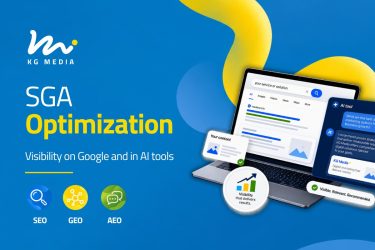
SEO in the AI era means optimizing your digital presence for organic results, Google’s AI Overviews, and generative AI tools.
Croatia SEO Summit 2026 covered how SEO and GEO work together, measuring AI visibility, content refreshes, technical SEO, e-commerce, and the role of brand.
Below, we explain how to apply these takeaways to an integrated SEO, GEO, and AEO strategy.
What are SEO, GEO, and AEO, and how do they work together?
SEO lays the technical and content foundations. GEO makes content easier for generative systems to understand, while AEO structures it to provide direct answers.
|
Approach |
Primary goal |
Application |
|
SEO |
Visibility in organic search results |
Indexing, rankings, content, internal links, and technical optimization |
|
GEO |
Understanding and visibility in generative systems |
Clear entities, verifiable information, sources, and a citation-friendly structure |
|
AEO |
Delivering clear, direct answers |
Answer-first paragraphs, questions, definitions, tables, and FAQs |

Lily Ray explored the relationship between SEO and GEO in her talk, „How SEO and GEO Work Together – and How to Do GEO Without Destroying Your SEO“.
GEO works best on strong SEO foundations. Problems with indexing, information quality, structure, or authority make content less likely to be cited by AI systems.
What does GEO optimization look like in practice?
First, check whether Google can index your key URLs. Then review canonical tags, your sitemap, content hierarchy, and internal links.
For a deeper look at how SEO, GEO, and AEO fit together, read our guide to optimizing your website for AI search.
What are the limitations of SEO, GEO, and AEO?
SEO performance depends on indexing, competition, and website authority.
GEO cannot guarantee citations because generative answers may vary by model, prompt, and available sources.
AEO makes it easier to provide direct answers, but concise formatting cannot replace topical depth, expertise, and credibility.
The best results come from combining all three approaches rather than relying on any one of them.
How do you measure a brand’s AI visibility?
AI visibility is measured by running a predefined set of prompts repeatedly across the same models and time periods.
A single query is not enough because answers can change depending on the model, prompt, context, and available sources.
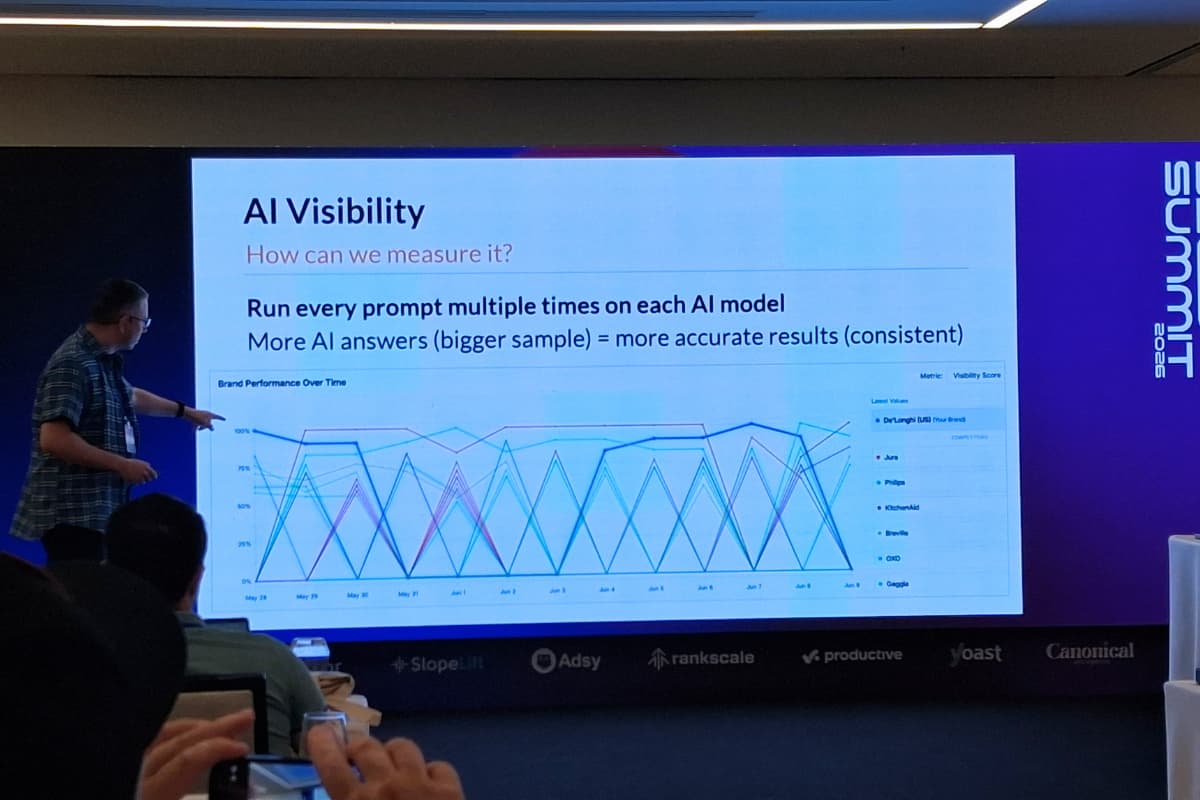
Bojan Basrak’s workshop focused on measuring brand presence in generative answers.
Because there is no standardized search volume for AI prompts, teams use synthetic prompts, which are realistic questions based on genuine user needs.
Prompts can be sourced from:
- queries in Google Search Console
- keyword research tools
- customer support and sales conversations
- real user questions and pain points
Repeating the same questions reveals whether the brand appears, which competitors are mentioned, and which sources are cited.
Which metrics should AI visibility reports track?
Track mention frequency, share of visibility, sentiment, cited sources, and referral traffic from generative tools.
Share of visibility compares how often the company appears relative to its competitors, while sentiment reflects the tone of those mentions.
On June 3, 2026, Google began rolling out Search Console reports for generative AI features.
The reports show impressions, URLs, countries, devices, and changes over time, but were initially available to only a subset of websites.
How do you put AI visibility measurement into practice?
Track your own presence, your competitors, and cited sources, and compare the results at consistent intervals.
A consistent methodology matters more than the result of a single AI query.
How should you structure content for people and AI systems?
Content should give a direct answer immediately, then expand on it with a clear structure, examples, and verifiable information.
For AEO and GEO, pages need to be easy for people to read and easy for AI systems to understand accurately.
That means using:
- clear H2 and H3 headings
- short, direct answers
- definitions and FAQ sections
- tables and comparisons
- original data and concrete examples
- named entities
Good content answers the question right away, then adds depth with examples and verifiable information.
When and how should you refresh existing SEO content?
Existing SEO content should be refreshed when it no longer matches current search intent, contains outdated information, or is losing visibility.
Content refresh means improving the substance and structure of an existing page, not simply changing the publication date.
Ryan Robinson discussed how to refresh existing content at scale in his talk, „How to Refresh Your Existing Content at Scale (for More SEO Traffic & LLM Citations)“.
A meaningful refresh includes:
- new data
- new examples
- fresh expert insights
- stronger internal links
- a clearer structure
- videos
- tables
- a better match for current user intent
How do you choose which content to refresh?
Prioritize pages with declining CTR, rankings in positions 5-15, outdated examples, or content that no longer matches current search intent.
A decline in CTR can point to a weaker title, while a drop in rankings calls for broader content or technical analysis.
That is why we compare queries, rankings, article structure, competing results, and internal links.
Based on that analysis, we decide whether to expand, restructure, or merge the article with other content.
A practical example: when should you refresh an existing page?
On one project, we kept the existing URL because of its relevant queries, internal links, and history of organic visibility.
Rather than create a new URL, we restructured the page, removed outdated sections, and aligned it with current search intent.
Why is technical SEO important for AI visibility?
Technical SEO matters because a page must be accessible, indexed, and understandable to both search engines and AI systems.
Crawling issues, canonical tags, status codes, or JavaScript rendering can limit both organic and generative visibility.
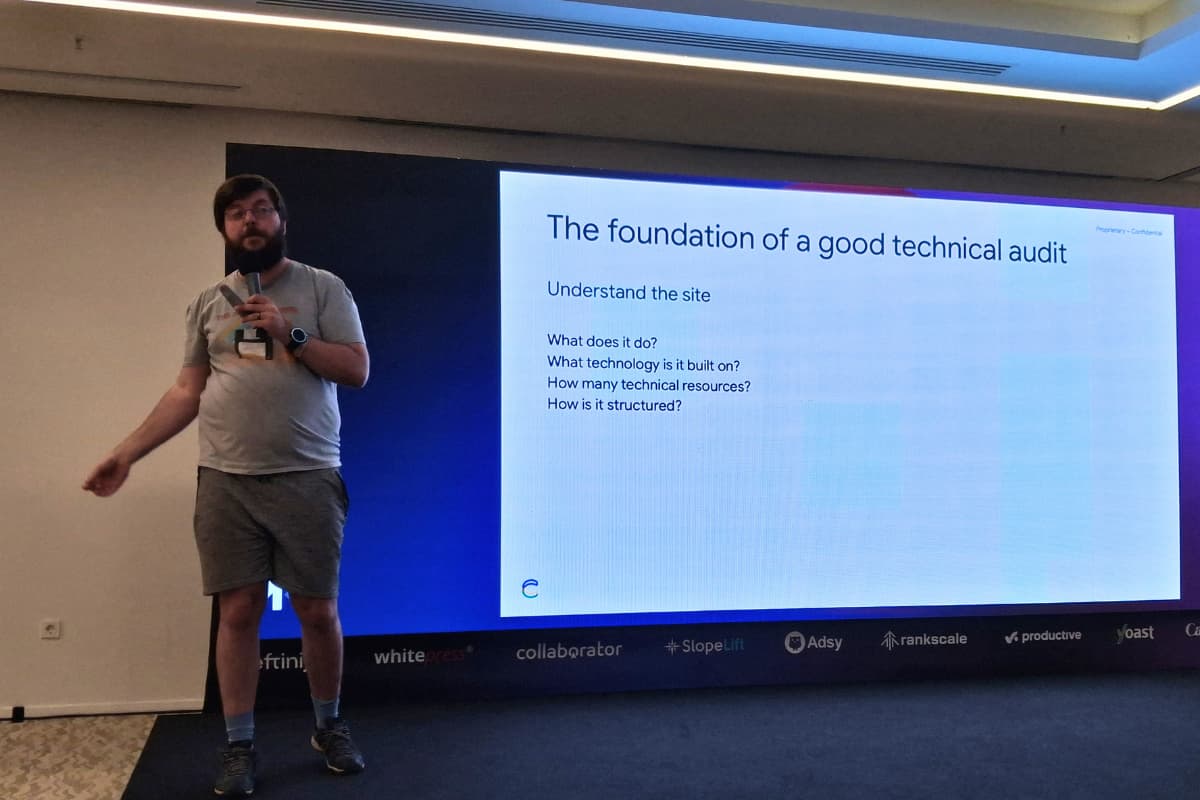
Martin Splitt covered technical audits in his talk „Better Technical SEO Audits“.
No special AI files or additional schema markup are required to appear in Google’s AI features. The same core SEO requirements apply: accessibility, indexability, and technical soundness.
A technical SEO audit should therefore cover:
- txt and access to CSS and JavaScript resources
- meta robots and X-Robots-Tag directives
- status codes and redirects
- canonical tags and XML sitemaps
- indexing and internal links
- JavaScript rendering and structured data
- hreflang and server logs where relevant
A sitemap should contain only canonical, indexable URLs that return a 200 status code.
Hreflang connects language and regional variants, while structured data must match the information visible to users.
None of these elements alone guarantees indexing or inclusion in AI-generated answers.
What should you check first in a technical SEO audit?
In our audits, we start with the URLs that drive traffic, leads, or conversions.
We check their status, indexing, canonical tags, internal links, rendered HTML, and structured data.
Once the priority URLs are covered, we expand the analysis to the rest of the website.
This order helps us identify issues affecting business results more quickly.
Technical accessibility is a prerequisite for both organic and generative visibility.
Explore KG Media’s SEO services and learn how a technical audit can uncover barriers limiting your website’s visibility.
How can you prepare e-commerce pages for AI search?
E-commerce pages need complete, consistent data because they are read by both users and systems that compare prices, availability, reviews, and purchase terms.
Online stores should provide:
- clear product names and useful descriptions
- prices, availability, and variants
- product structured data
- well-organized categories and stable URLs
- no technical barriers
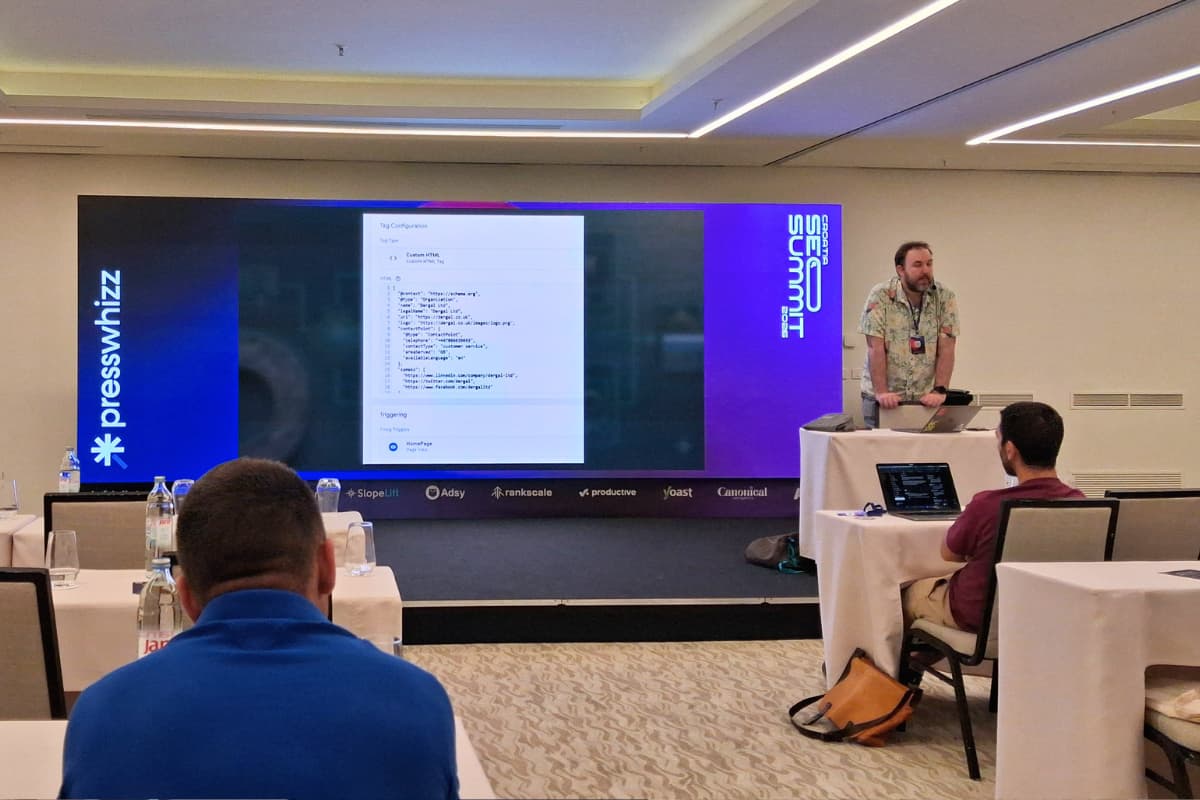
Gerry White discussed the changes in e-commerce SEO in his talk „E-commerce in 2026, Nothing Has Changed, Everything Has Changed“.
What should you check on a product page?
The product name, description, price, availability, variants, shipping, and returns information should be visible and consistent with the structured data.
Product structured data cannot compensate for incomplete information on the page.
How does brand building support SEO and GEO performance?
A strong brand supports SEO and GEO through relevant mentions, expert content, reviews, and consistent information across digital channels.
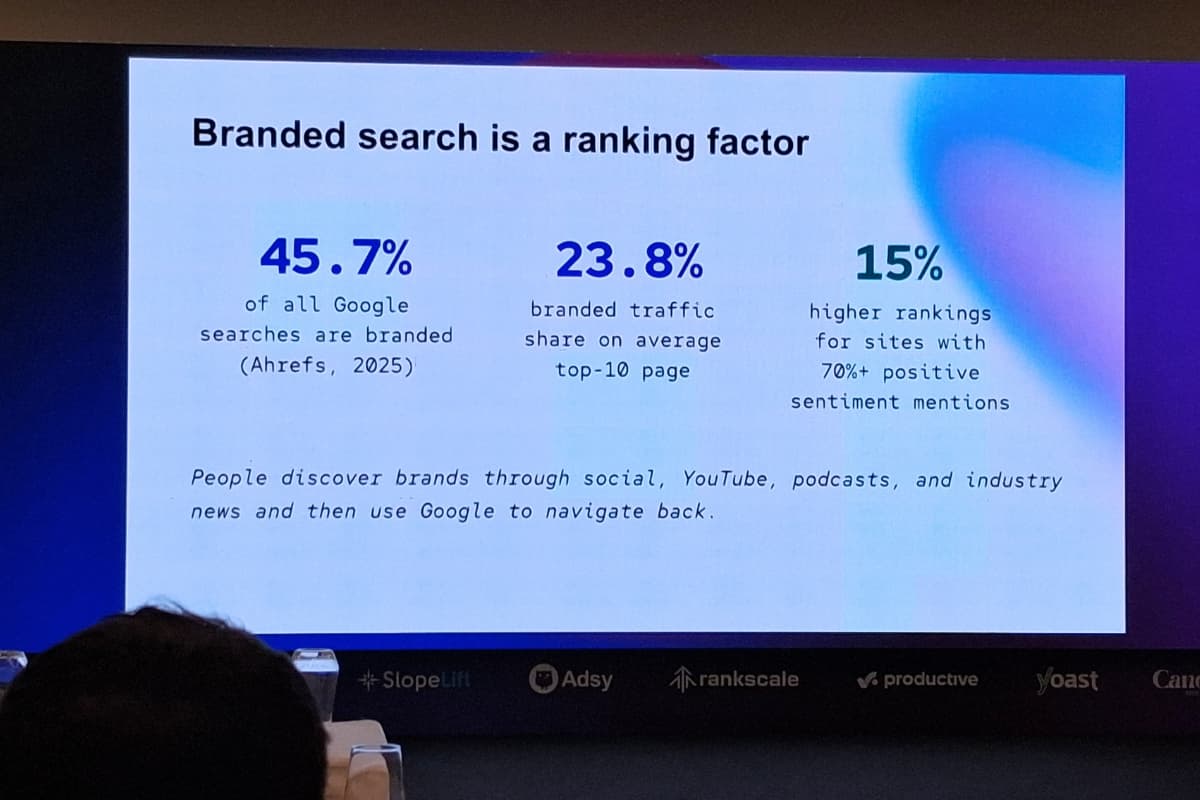
The connection between brand strength and organic visibility was the focus of Krešimir Ćorluka’s workshop, „How Branding Can Make or Break Your SEO“.
Branded search, digital PR, podcasts, YouTube, social media, and industry publications can strengthen brand awareness and digital authority.
Your own website remains the foundation. Credible external sources reinforce the connection between your company and a particular topic, service, or industry.
Reviews, interviews, expert articles, and social profiles also build context and trust.
How can you strengthen your brand’s digital footprint?
Keep your company name, service descriptions, and contact details consistent across your website and related profiles.
Then choose relevant media outlets, directories, and review platforms.
The relevance of the source matters more than the number of platforms on which your company appears.
Why combine SEO, GEO, and AEO in a single strategy?
An integrated SEO, GEO, and AEO strategy aligns technical accessibility, content quality, external signals, and the tracking of brand presence in AI-generated answers.
Optimization should not focus on a single AI tool. Start by improving indexing, content structure, and the quality of your answers.
It is also important to provide credible information and maintain a consistent presence in relevant external sources.
The goal is not just an organic click, but to become a trusted, relevant source when users are looking for an answer, comparison, or solution.
When do you need an SEO, GEO, and AEO audit?
An audit is needed when important URLs are losing visibility, content does not answer queries clearly, or the brand rarely appears in AI-generated answers.
At KG Media, we combine technical SEO, content, and AI visibility measurement in a single audit with clearly defined priorities.
Request an SEO, GEO, and AEO audit to discover which barriers and untapped opportunities are limiting your website’s visibility.
FAQ
Is GEO a replacement for SEO?
No. GEO builds on technical and content-related SEO foundations to make information easier for generative systems to understand.
What is the difference between GEO and AEO?
AEO structures content to provide direct answers, while GEO improves its clarity and visibility in generative systems.
How do you measure a brand’s AI visibility?
AI visibility is measured by repeating the same prompts and tracking mentions, cited sources, competitors, sentiment, and referral traffic.
Does structured data guarantee inclusion in AI-generated answers?
No. Structured data helps systems understand a page, but it does not guarantee indexing, citation, or inclusion in an AI-generated answer.
How do you optimize a website for AI search?
A website is optimized for AI search through technical accessibility, clear answers, verifiable information, structured data, and consistent external signals.