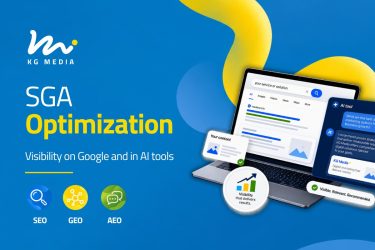
To increase the likelihood that ChatGPT will use and cite your content, your copy should answer the user’s question directly, follow a clear structure, and include verifiable information.
People no longer search for information only through Google results. They increasingly turn to ChatGPT, Perplexity, Microsoft Copilot, and Google AI Overviews, making content optimization for ChatGPT an important part of online visibility.
GEO (Generative Engine Optimization) is the process of optimizing content so generative AI systems such as ChatGPT, Perplexity, and Copilot can more easily understand, use, and cite it in their responses.
There is no formula that guarantees a citation. However, a well-researched and trustworthy page is more likely to be recognized as a useful source.
How Do ChatGPT and Generative AI Systems Find Information?
When using web search, ChatGPT combines information from sources relevant to the user’s query. A clearly defined topic, a direct answer, up-to-date information, visible authorship, and verifiable sources help it identify useful material, but they do not guarantee a citation.
For content to be eligible for inclusion in ChatGPT Search results, the website must allow OAI-SearchBot access and must not block it in the robots.txt file.
What Does AI Look for in Content?
- A clear topic and search intent
- Short paragraphs with specific answers
- Reliable information and a logical structure
- Links to thematically related pages
A user may not search for the technical term “GEO optimization”. They may instead ask, “How can I get my website to appear in ChatGPT answers?” A strong article should address both ways of thinking.
What Is GEO Optimization, and What Does It Look Like in Practice?
GEO optimization adapts content for generative AI systems by pairing a direct question with a specific answer and enough context for the topic to be understood correctly.
Optimizing for AI results does not mean repeating the same keyword in every sentence. High-quality GEO content covers a topic thoroughly, connects important concepts, and answers the questions people actually ask.
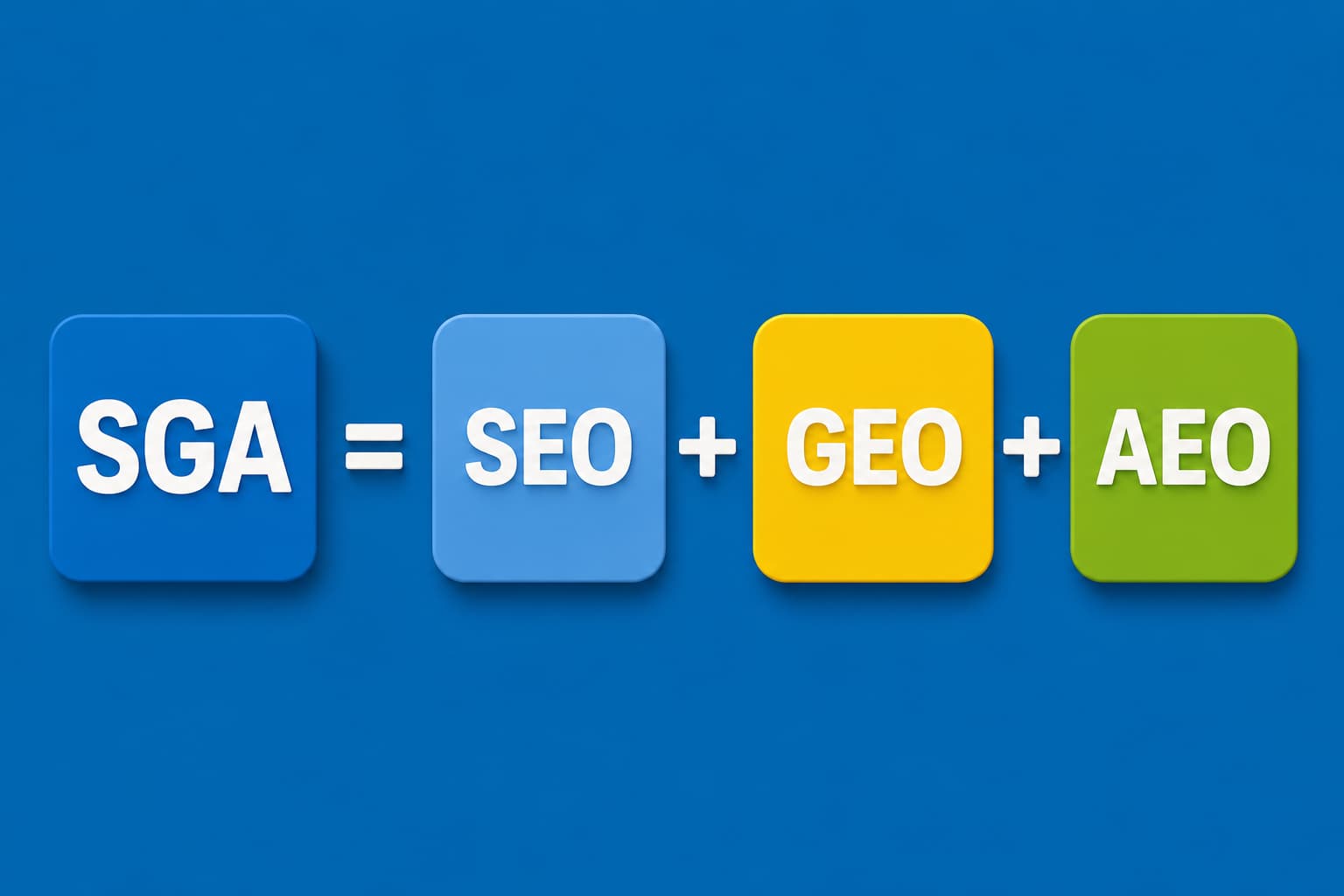
A common problem when optimizing existing articles is that the main answer appears too late. KG Media uses SGA optimization to combine SEO, GEO, and AEO, making content clearer and more useful.
Effective optimization for generative search engines includes:
- Concise definitions
- Answer-first paragraphs
- Key entities
- Related topics
- Internal links
- Specific, verifiable information
What Is the Difference Between SEO and GEO?
SEO helps a website remain accessible, indexable, and visible in search engines, while GEO helps generative tools understand, summarize, and use its content. AI SEO brings the two approaches together.
For example, an SEO article might target the query “Hotel in Rovinj”, while a GEO version would also answer the question “Which hotel in Rovinj is best for a family holiday?”. The guide to AI SEO in Croatia provides more examples of how the two approaches work together.
Why Is Content Structure Important for AI Citations?
Structured content makes it easier to find a specific answer. This benefits readers as well as systems that try to summarize content or match it to a particular question.
A strong structure might look like this:
- A question in the subheading
- A brief answer immediately below it
- Additional explanation
- A specific example
- A link to related content
A poor example is a long block of text in which the main point appears only after several generic paragraphs.
If you are writing for the Croatian market, include local context. People in Croatia often search in Croatian, use local expressions, and look for information related to a specific city, region, or type of service.
A well-organized article is not enough if the page cannot be indexed or the information is outdated. A named author, relevant sources, and original examples further strengthen the page’s credibility.
How to Write Definitions AI Can Cite
Start by defining the term precisely, then add a brief explanation or a specific example.
A definition should sound natural, be concise, and be short enough to make sense out of context.
The formula for a strong definition is: Short answer, explanation, example.

Examples of Strong Definitions
SEO improves a website’s visibility in organic search results through high-quality content, sound technical setup, and clear organization.
GEO adapts web content for generative AI systems so they can more easily understand and use it in their answers.
AEO structures content into concise answers tailored to specific user queries, featured snippets, and voice search.
AI Search uses artificial intelligence to generate concise answers to user queries, often by combining information from multiple relevant sources.
A strong definition can stand on its own and remain clear even when removed from the rest of the article.
Why Are Entities Important for AI Understanding?
Entities help AI systems identify what a text is about and how it relates to other topics.
In this context, important entities include ChatGPT, OpenAI, Google AI Overviews, Perplexity, Microsoft Copilot, SEO, GEO, AEO, E-E-A-T, AI Search, and content marketing.
When these terms are used naturally, an AI system can more easily understand the article’s topical framework. Simply listing them, however, is not enough. Every entity should make sense within the sentence.
For example, it is better to write:
“Perplexity often displays sources alongside its answers, so brands need their information to be clear, up to date, and topically relevant.”
This is more useful than mechanically inserting the phrase “Perplexity AI content citation SEO GEO”.
Entities should support the explanation of a topic, not serve as a mechanical list of keywords and tool names.
How to Build Topical Authority
Topical authority is built through a network of related content, not a single article.
For example, a hotel or tourism board that wants to be recognized as a relevant source on holidays in Istria should not publish only one general destination article. It should also cover topics such as beaches, family excursions, local food, seaside accommodation, and off-season activities.
Each article can cover one part of the wider topic:
- Accommodation types and hotel amenities
- Frequently asked guest questions
- Local attractions and excursions
- Recommendations for different times of year
When these articles are connected through internal links, users can continue exploring more easily, while search engines and AI systems can more clearly recognize the subject area the website covers.
Anchor text should describe the page it links to. Instead of “Learn more”, use descriptive phrases such as “Best Beaches in Istria” or “A Guide to Family Holidays in Poreč”.
Topical authority grows when a website consistently covers and connects topics within the same subject area.
Why Do FAQ Sections Improve AI Visibility?
An FAQ section answers the questions users actually ask. Each question should sound natural, and the answer should provide the key information immediately.
A well-structured FAQ is valuable for AEO because each answer can function as a standalone unit. Answers should be brief, specific, and consistent with the information in the main article.
How to Combine SEO, GEO, and AEO
SEO, GEO, and AEO work together when an article has a solid technical foundation, covers the topic precisely, and answers user questions directly.
|
SEO |
GEO |
AEO |
|
Rankings Search engines Organic traffic |
AI visibility Generative AI AI citations |
Direct answers Featured snippets Voice search |
SEO provides a strong technical and content foundation. GEO helps AI tools understand the topic and context, while AEO shapes parts of the text into clear answers to user questions.
Before publishing, check whether the article includes:
- A clearly defined topic
- A main question and direct answer
- Logical H2 and H3 subheadings
- Related concepts and entities
- Internal links
- Specific, verifiable, up-to-date information
- An FAQ section
Combining SEO, GEO, and AEO improves content visibility in traditional search, AI-generated answers, and results that respond directly to user queries.
Before updating existing pages, review their technical accessibility, answer structure, and topical connections in the guide to optimizing a website for AI search.
What Is SGA Optimization?
SGA optimization brings SEO, GEO, and AEO together in a single approach to digital visibility.
The Most Common Mistakes When Optimizing for AI Systems
The most common mistakes in AI optimization are vague content, poor organization, and writing primarily to earn AI citations.
- Overly general content
Sentences that sound good but do not provide a specific answer help neither the reader nor the AI system.
- Excessive keyword repetition
Keywords should appear naturally. Repeating them frequently cannot replace a high-quality explanation of the topic.
- Long, difficult-to-scan paragraphs
Short paragraphs and clear subheadings make content easier to read and key information easier to identify.
- Writing only for AI citations
Content must be useful to the reader first. Structure alone is not enough if the text does not provide a good answer.
- Lack of expert context
Related articles, specific examples, sources, and a clearly identified author help build trust and strengthen E-E-A-T signals.
Conclusion
Optimizing content for ChatGPT is not based on a single trick. A strong SEO foundation, direct answers, logical structure, and topically connected content improve the chances of visibility in both traditional and AI search.
Through its SEO, GEO, and AEO services, KG Media helps companies improve content visibility in both traditional and AI-powered search results.
Want to see how well your pages and articles align with SEO, GEO, and AEO principles? Request a content review and find out where there are specific opportunities to improve visibility in Google and AI-generated answers.
FAQ
How can I increase the chances of ChatGPT using my content?
Improve your chances by providing clear answers, verifiable information, relevant sources, and topically connected articles.
How do I optimize a website for AI search?
Optimize a website for AI search by ensuring technical accessibility, using logical subheadings, writing concise definitions, and answering user queries directly.
What is GEO optimization?
GEO optimization adapts web content so generative AI tools can more easily understand it, match it to a query, and use it as a source.
How do AI systems choose information sources?
AI systems can consider relevance, how up to date the information is, source credibility, and how closely the content matches the user’s query.
Why is my content not visible in AI-generated answers?
The most common reasons are technical inaccessibility, an unclear structure, a lack of direct answers, and weak topical connections across the content.